When you buy sketching gear through our retail links, Pan & Transit may earn a commission at no additional cost to you. How Pan & Transit earns referral commissions
An empty watercolor tin offers the freedom to build a custom palette from artist-grade tubes without committing to pre-selected factory sets. For beginners, however, portability hinges on mechanical practicalities: pan retention mechanisms, hinged mixing wells that lie flat, and clasps that stay closed inside a transit bag.
What Beginners Should Look For in a Pocket Tin
The standard distinction in portable watercolor boxes lies between modular metal rail tins and monolithic molded micro-wells. While miniature tins fit into any coin pocket, beginners routinely struggle with two hidden friction points: lack of mixing surface and unyielding well layouts.
The Mixing Surface Rule: In plein air painting, mixing capacity is just as vital as pigment capacity. Boxes with fold-out enamel flaps allow you to isolate clean puddles and wash transitions. If your tin has no mixing wings, you will need to carry an external dish or clip-on palette plate.
1. The Benchmark Choice: Classic 14 Half-Pan Metal Tin
For most novice painters, the traditional two-tier metal palette remains the most forgiving configuration. This classic format features a fold-out metal mixing flap, an integrated lid partitioned into sloping wells, and a removable central metal insert plate equipped with adjustable retention prongs.

Physical Architecture & Ergonomics
- Modular Half Pans: Includes 14 individual plastic half pans. Because each pan snaps into place individually between bent metal clips, you can swap colors, rearrange color wheel arrangements, or remove individual pans to rinse dried residue without flooding adjacent colors.
- Fold-Out Mixing Wings: Hinged on the bottom edge, the fold-out steel plate extends horizontal mixing space while the top lid provides divided wells for controlled puddle separation.
- Under-Tin Thumb Ring: The fold-down wire ring on the reverse side allows you to hold the opened palette securely on the palm of one hand like an easel tray while sketching standing up.
Beginner Limitation: Metal retention prongs occasionally require gentle bending with pliers to hold third-party half pans snugly. When closing, ensure the fold-out wing is completely dry to prevent moisture from rusting the hinge pin over prolonged use.
2. The Ultra-Minimalists: 12-Grid Molded Mini Tins
If your objective is pocket sketching during city commutes or trail walks where weight takes precedence over mixing volume, palm-sized mint-tin enclosures provide an ultralight footprint. Rather than independent half pans, these rely on a single thermoformed plastic tray insert partitioned into a 12-compartment grid.

Seven-Color Sunshine 12/24 Grid Tin: A stamped metal case featuring a compact profile and embossed lid. Well walls are molded together, maximizing pocketability at the cost of modular individual pan replacement.
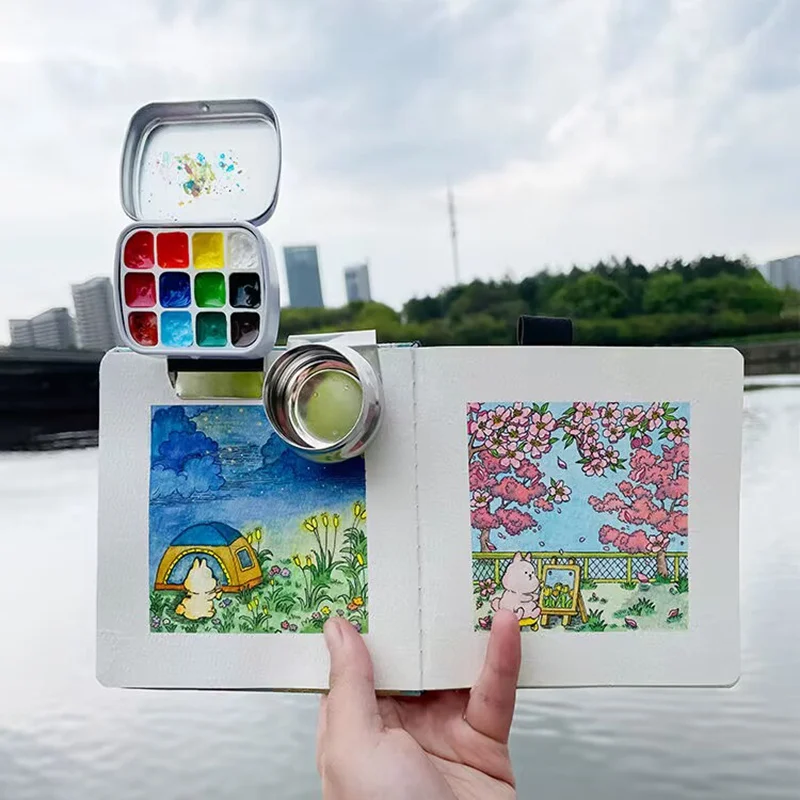
DINGYI 12-Grid Mini Tin: Compact silver-finish form factor suitable for clipping directly alongside a sketchbook edge using an external binder clamp.
Ergonomic Trade-Offs of the 12-Grid Format
The grid interior is fixed. When one color runs out, you must refill that single well in place rather than substituting a pre-poured backup pan. Furthermore, with no secondary fold-out mixing flaps, your only integrated mixing area is the inside of the tin's small lid. If wet washes bead up on the bare metal or painted coating, rubbing the metal lid gently with a gum eraser or a pinch of baking soda can break surface tension and facilitate smoother puddling.
3. High-Capacity Travel: Elongated Multi-Pan Palette Box
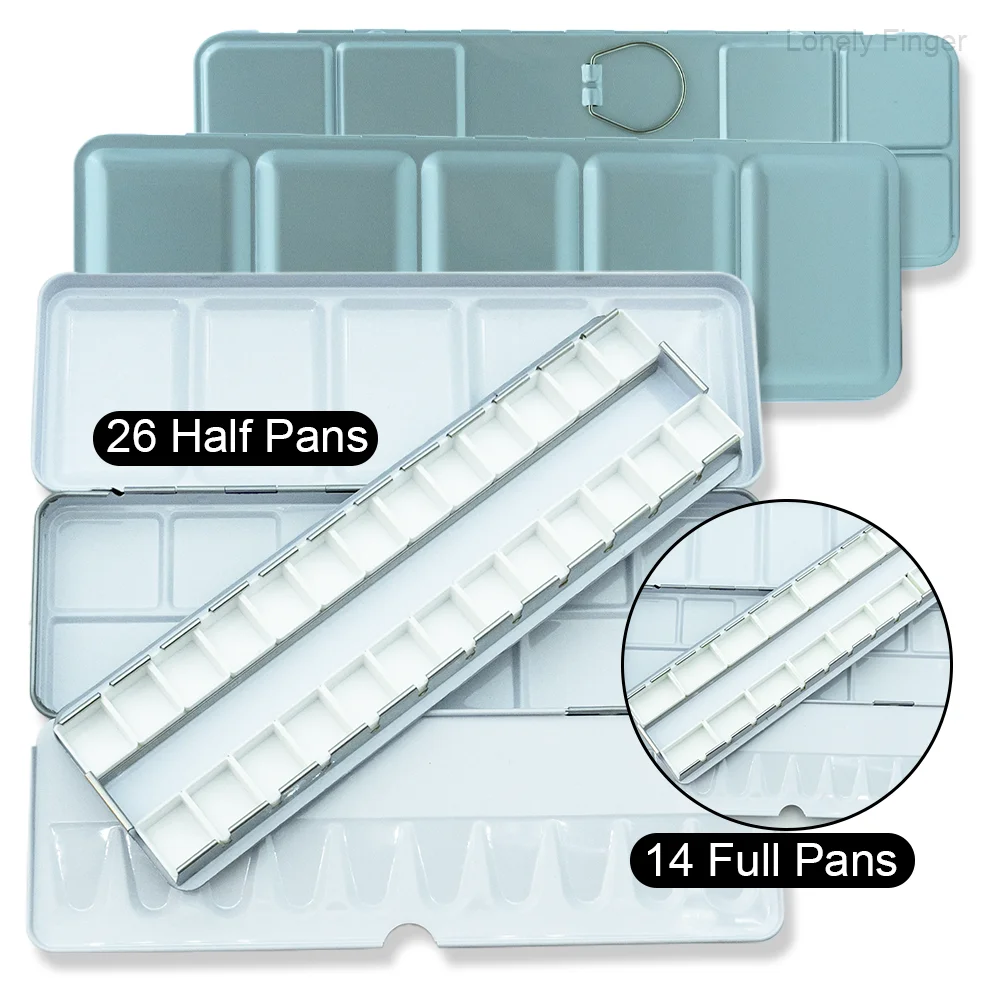
Beginners intending to build a broad split-primary palette—or those who prefer to keep earth tones, pastels, and convenience greens on hand—often outgrow a 12-to-14 pan arrangement. An elongated metal field box expands capacity across parallel rows while preserving modularity.
Capacity vs. Field Handling
Accommodating up to 26 half pans (or 14 full pans) on an extended center track, this chassis provides expansive fold-out wings with multiple stamped depressions to prevent cross-contamination between warm and cool washes.
Consideration for Beginners: The extended tin measures roughly twice the width of micro-tins. It fits comfortably into a messenger bag or daypack, but it is too long for standard jacket pockets. If you work primarily at a table, park bench, or plein air easel, the expanded mixing real estate pays immediate dividends.
Comparative Architecture Overview
| Tin Category | Pan Configuration | Mixing Surfaces | Best Suited For |
|---|---|---|---|
| Classic Metal Field Box (Product 2) | 14 Removable Half Pans (Metal Prongs) | Fold-out flap + Lid divisions (Generous) | First-time tube watercolorists needing modularity & mixing room |
| Molded Micro Tins (Products 1 & 4) | 12 Fixed Molded Wells (Plastic Grid) | Lid interior only (Minimal) | Urban sketching, pocket EDC kits, sketchbook clip setups |
| Extended Metal Box (Product 3) | 26 Half Pans or 14 Full Pans | Double-length fold-out flap + Divided lid | Expanded palettes, studio travel, dedicated plein air packs |
Practical Setup: Filling Pans from Tubes Without Cracking
Empty tins are designed to be filled with moist tube paints. To prevent shrinkage gaps and loose paint blocks:
- Fill in Two Layers: Squeeze tube paint into the bottom corners first, filling each pan half-way. Tap the pan firmly against a work surface to eliminate trapped air bubbles.
- Allow Partial Drying: Let the bottom layer cure for 24 to 48 hours. Water evaporates, causing natural volume loss.
- Top Off and Settle: Squeeze the final layer up to the rim of the pan, smoothing with a toothpick. Allow another 48 hours to set into a firm, tacky block that won't dislodge when held upright on a trail.
The Verdict for Beginners: If you are assembling your first kit, start with the 14-pan classic metal tin (Product 2). Its modular half pans allow you to refine your color palette one pigment at a time, while the fold-out flap provides the essential mixing zone beginners need to learn water-to-pigment control. Reserve the ultra-compact micro-grid tins for secondary, grab-and-go kits once your core palette preferences are established.